

What symptoms can be treated with acupuncture is one of the most common questions. Acupuncture is the insertion of needles into the body for healing effects, and it was developed in ancient China over 2500 years ago. Although it is quite ancient, it remains highly effective and relevant in today’s world.
Uses of Acupuncture
Acupuncture could be used to treat a broad range of issues, ranging from pain such as muscle and joint pain, headaches, all the way to internal organ issues such as cardiovascular or digestive diseases, and it could also be used to reduce stress and anxiety. A single needle can be used to treat all these different types of diseases.
Classical Way
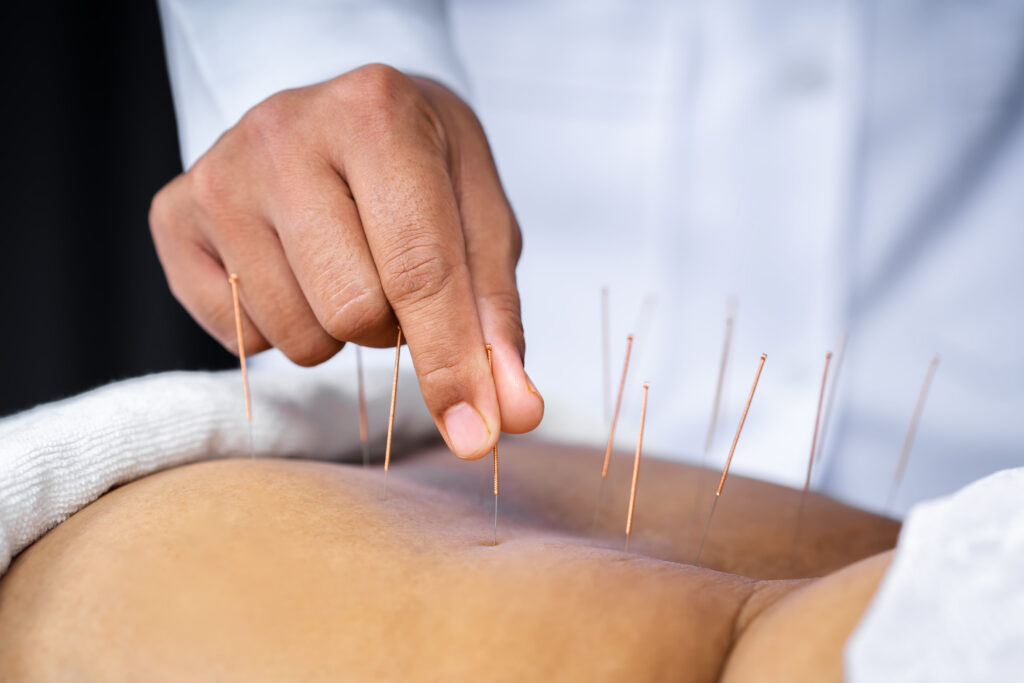
Acupuncture Treatments
In traditional Chinese medicine theory, there is a substance in our body that is vital for survival, and that is called the chi. Some people call it energy or life force. In our bodies, if the chi flows smoothly and we have sufficient qi, our bodies will be healthy physically and mentally.
However, if the chi is insufficient or blocked in certain parts of our body, it could cause disease and sickness.
Acupuncture aims to balance the flow of chi in our bodies. For example, if the chi is stuck in particular spots, that can cause pain. When doing acupuncture, it can unblock the energy, thereby relieving the pain.
Meridians and Accu Points
Just as blood flows through blood vessels, qi flows through channels we call meridians. All these lines are different meridians. Along each meridian, there are certain points that we call accu points or pressure points, and these are the points that we stick the needle in. Accu points are where the body’s outside and inside communicate.
The meridians actually go inside your body as well. Therefore, it can actually connect to the internal organs. Take the lung meridian, for example. This line connects all the way inside to the lungs.
Therefore, when placing needles at pressure points along the lung meridian, even if the arm is involved, it can also be used to treat lung or respiratory diseases.
Modern Science Way
There are a couple of major theories to explain why acupuncture works in modern science.
Releasing Endorphin
Acupuncture stimulates the nerves and sends a signal all the way to the brain, leading the brain to release hormones called endorphins, which are our body’s natural painkillers. It not only helps us relieve pain, but it can also help us reduce stress, so that’s why this is also called a happy hormone.
Improving Circulation
Acupuncture can help promote circulation in the local area; therefore, improved blood circulation can enhance the healing of wounds and injuries.
Decrease Inflammation
Some studies have shown that doing acupuncture, it can decrease pro-inflammatory markers, which means it could significantly decrease inflammation in our bodies, thus reducing pain.
Regenerate Nerves
There are also studies showing that acupuncture can stimulate the brain to secrete nerve growth factors, which can help regenerate nerves, and this is important for dealing with nerve damage.
Risks Side Effects
The risks and side effects of acupuncture are none to minimal if done by a certified and well-trained acupuncturist. The most common side effect is that the points where the acupuncture needles were put in are sore for a day or two, but it does not have any long-term effects.
Also, some pressure points can cause miscarriage, so people who are pregnant need to be careful of those points, but of course, certified acupuncturists will definitely know which points not to put.
Treatment Process
Acupuncture needles are actually 10 times thinner than injection needles or the needles we use for blood donation, so they are really, really thin. These are sterile, and it is one time used only.
The process is to wash hands first, then use alcohol to disinfect, ensuring there’s no infection. Wipe it in the pressure point of the patient. Take out one needle. Put it on top of the pressure point that has just been disinfected, then tap it; the needle is in.
The next step is to slide the needle gently right in. After it’s done, it’s usually going to stay here for about 20 to 30 minutes, depending on the patient, then just pull it out and dispose of it in a valid needle-disposal box.
Top 10 Conditions Treated
These are the top 10 most common conditions that acupuncturists and Chinese medical doctors treat and get results for. If you have a complex digestive illness or fibromyalgia or something else complicated going on, there is a lot of evidence that it works. Read more case details in our blog section.
A study on the top ten conditions seen in clinical practice lists the following profiles:
- Musculoskeletal pain and acute injuries
- Anxiety, depression, and emotional disorders like stress or PTSD
- Fatigue and stress-related pathologies
- Headaches of various kinds
- Digestive conditions
- Women’s health
- Insomnia
- Skin problems
- Allergies
- Frequent sore throat, cold, coughs, and upper respiratory infections
Typically, when thinking of pain or inflammation, this is the list of what is seen in practice nationwide. What symptoms can be treated with acupuncture include all these forms of complex pathology.
FAQs
Does acupuncture work?
Acupuncture could be used to treat a broad range of issues, ranging from pain such as muscle and joint pain and headaches, all the way to internal organ issues such as cardiovascular or digestive diseases, and it could also be used to reduce stress and anxiety
How long does it take to get better?
Usually, it’s going to be staying here for about 20 to 30 minutes, depending on the patient
Can acupuncture treat complex illnesses?
We treat all kinds of complex pathology too, and it really is up to the practitioner or the doctor and their training regarding whether or not they can help you successfully treat that condition.
Conclusion
Acupuncture, just like any other modality of medicine or therapies it, has its own strengths, and it also has its own limitations.
Therefore, we need to have an open mind, accept other forms of medicine, and, even better, use an integrated approach so that we can all work together to better help and serve patients.