

I’ve talked to a lot of people in Wall who deal with migraines, and the stories are pretty similar. Someone will tell me they’ve been getting headaches twice a week for the past three years. They’ve tried five different medications. Some worked for a while, then stopped. Others came with side effects that were almost worse than the migraines themselves – extreme fatigue, weight gain, and brain fog that made it hard to work.
That’s usually when people start looking at alternatives. Acupuncture comes up because their doctor mentioned it, or because their insurance added coverage for it, or, honestly, because they’re just tired of the medication cycle and want to try something different.
Does it work? Sometimes, yeah. Not for everyone, and it’s definitely not instant. But I know people in Wall who went from four or five migraines a month down to maybe one. That’s life-changing when you’ve been dealing with chronic headaches for years.
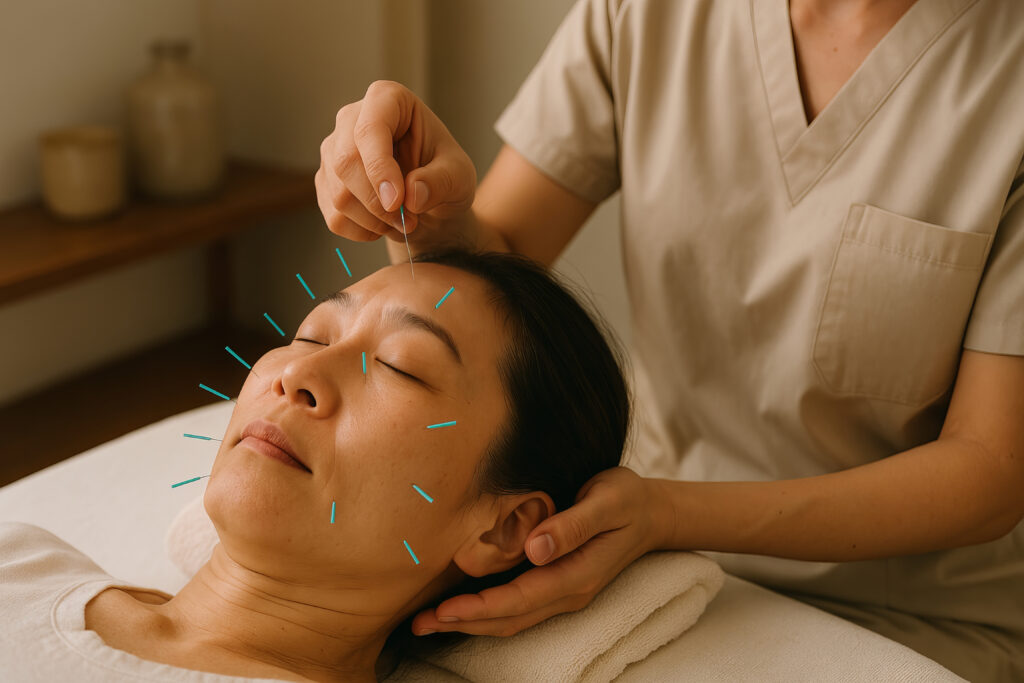
Acupuncture For Headaches In Wall, NJ
The Whole Needle Thing (It’s Not What You Think)
Let me address this right away because it’s the first thing everyone worries about. The needles are tiny. Seriously tiny. If you’ve ever had blood drawn or gotten a vaccine, forget that image. Acupuncture needles are maybe the width of a couple of hairs. Most people tell me they barely feel them going in, if they feel them at all.
A friend of mine who gets acupuncture at a clinic over on Route 35 described it like this: “You know that feeling when someone lightly touches your arm? That’s about it. Sometimes I don’t even notice when she puts them in.”
The acupuncturist places needles at different spots depending on your specific migraine pattern. If your headaches always start with tension in your neck, you’ll get needles there plus some other points on your hands and feet. Someone whose migraines seem tied to their menstrual cycle gets a different set of points. There’s definitely an individualized approach to it, not just sticking needles randomly and hoping for the best.
Once the needles are in, you lie there for maybe 20 or 30 minutes. Some clinics play quiet music. Some don’t. A lot of people fall asleep during this part, which surprised me when I first heard it, but it makes sense – if you’re exhausted from dealing with chronic pain, that quiet downtime probably feels pretty good.
What’s actually happening in your body during this? The honest answer is we’re still figuring out all the details, but the basic idea is that the needles stimulate certain nerves, which trigger your brain to release endorphins and other natural pain-relieving chemicals. Blood flow improves. Inflammation goes down. And somehow this helps regulate those dramatic blood vessel changes that cause the throbbing migraine pain.
The research on this is pretty solid at this point. Multiple studies out of Germany, China, and universities here in the U.S. show that people getting acupuncture have fewer migraine days compared to people who don’t. It’s not a placebo effect – they’ve tested for that by doing sham acupuncture where needles don’t actually penetrate the skin, and real acupuncture still comes out ahead.
But here’s the thing – you don’t walk out after one session cured. Most people start noticing changes around week four or five. By week eight, you have a better sense of whether it’s really helping or not.
Why People Around Here Are Trying It
Wall isn’t exactly a low-stress place to live. You’ve got the Parkway traffic if you commute. The shore traffic in summer if you’re trying to do anything on weekends. Work stress, family stress, all the normal stuff. And stress is a major migraine trigger for a lot of people.
Dr. Russo over at Monmouth Medical has been recommending acupuncture to his migraine patients for a few years now. I talked to him about it last year, and he said he still prescribes medications – that’s still the first-line treatment. But for patients who can’t handle the side effects, or who’ve tried medication after medication without getting relief, acupuncture gives them another option to work with.
The side effects issue is real. I know a teacher at Wall High who had to stop her preventive migraine medication because it made her so tired she could barely get through the school day. She was sleeping nine hours a night and still felt wiped out by lunch. She switched to acupuncture instead and said her migraines spaced out – went from weekly to every couple of weeks. Not perfect, but way better than being exhausted all the time on top of getting migraines.
Here’s something else that matters – acupuncture treats more than just the headache itself. A lot of migraine sufferers also have issues with sleep, or they carry a ton of tension in their neck and shoulders, or they’re dealing with stress and anxiety. All that stuff feeds into the migraines. An acupuncturist I know who practices in Manasquan told me she never treats just the headache. She looks at sleep patterns, stress levels, muscle tension, everything, because it’s all connected.
That makes sense to me. You can’t really separate the migraine from the rest of what’s going on in someone’s life. If you’re not sleeping well because you’re stressed about work, and that stress has you clenching your jaw all night, those things are going to contribute to why you’re getting headaches.
What It Costs and Whether Insurance Helps
Sessions run somewhere between $80 and $110 around here, depending on where you go. Your first appointment will be more – usually $125 to $150 – because they spend extra time going through your medical history and figuring out a treatment plan.
The good news is that insurance coverage has gotten way better in the last few years. Horizon covers acupuncture for chronic pain now, including migraines. So does Aetna and Cigna, though the number of sessions they’ll pay for varies. Most plans seem to cover somewhere between 12 and 20 sessions per year. Some want you to get a referral from your regular doctor first. Others let you just call an acupuncturist directly.
If you’re paying out of pocket, it’s worth doing the math on what you’re already spending. One woman I know added up her migraine medications, doctor visits, and the two emergency room trips she made last year when headaches got really bad. Came to about $2,400. She figured out that regular acupuncture would cost her around $2,000 a year, and she’s getting better results than she was getting from the medications. So even without insurance, it worked out financially.
Most people start with weekly sessions. After six to eight weeks, you usually drop down to every other week. Some people eventually get to where they only need to come in once a month, or just when they feel a migraine pattern ramping up again. It really depends on how your migraines respond to treatment.
Finding Someone Who Knows What They’re Doing
Wall has a few acupuncture practices, but not all of them focus on headaches. That matters because treating migraines requires some specific knowledge – understanding different headache triggers, knowing which points work for which types of migraines, and being able to adjust your approach when something isn’t working.
New Jersey requires acupuncturists to be licensed. They have to complete at least three years of graduate training and pass national board exams. You can check someone’s license on the state board website before you book an appointment.
Experience with migraines specifically makes a difference. One acupuncturist in Wall told me she’s treated hundreds of migraine cases over the years, so she knows pretty quickly if the treatment is heading in the right direction. By session four or five, she can usually tell if what she’s doing is working or if she needs to try different points.
When you’re calling around, ask direct questions. How many migraine patients do you see? What kind of results do people typically get? How long before most patients notice improvement? A good practitioner will give you honest answers and won’t promise you’ll be cured after one visit.
Keep track of your own migraines during treatment. Write down how many you get each week, how bad they are, and how long they last. After a month, compare it to the month before you started treatment. After two months, look at the pattern. If you’re not seeing any improvement by eight or nine sessions, either the treatment isn’t working for you, or you need to try a different acupuncturist.
Most people I know who do acupuncture keep their migraine medications around. They don’t throw everything out and rely completely on needles. They just find they don’t need the medications as often. That seems like a smart approach to me – you’re not abandoning what works medically, you’re just adding something that might help you use less of it.
Look, migraines are complicated. What triggers your headaches is probably different from what triggers mine. What helps your coworker might not do anything for you. Acupuncture works for enough people that it’s worth trying, especially if you’ve been struggling with migraines for years and haven’t found good relief yet. But it’s not magic, and it won’t work for everyone. Just something to consider if you’re tired of the medication merry-go-round and want to try a different approach.